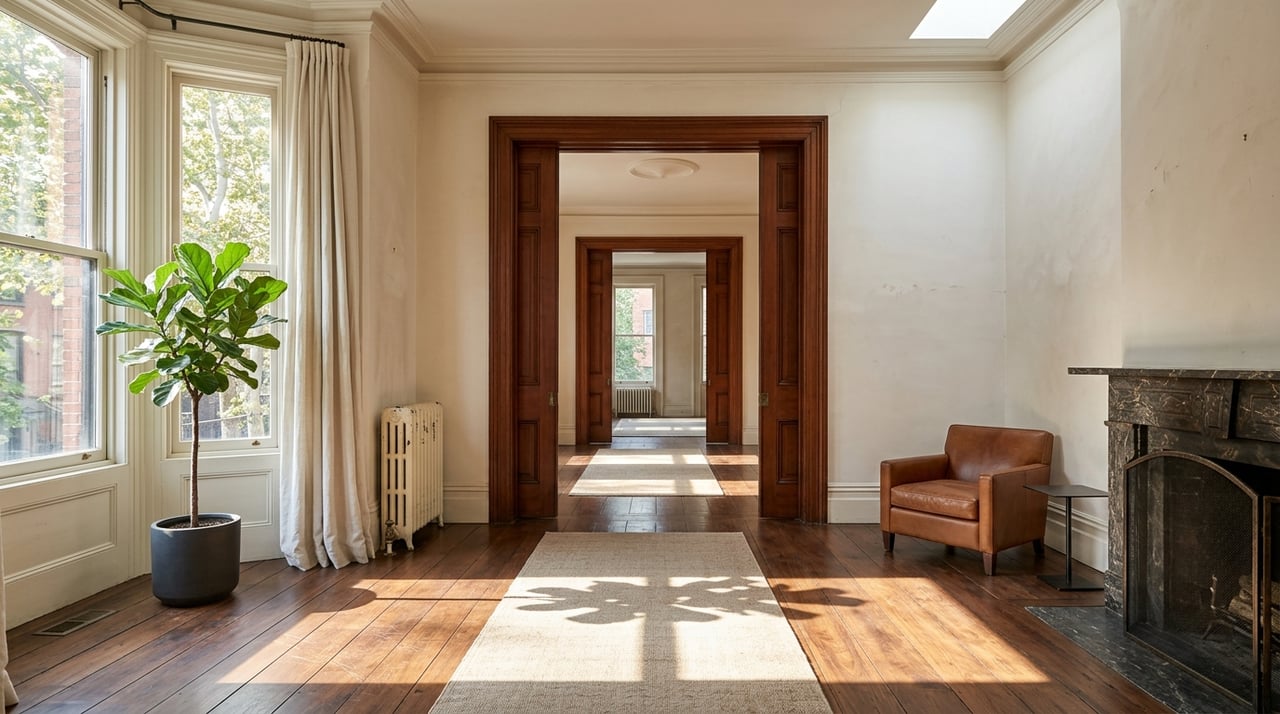
Trading A Park Slope Condo For A Brownstone
July 16, 2026
July 16, 2026
Thinking about trading your Park Slope condo for a brownstone? It can feel like the natural next step, but it is also a very different kind of move. You are not just buying more space. You are taking on a new price point, a new ownership structure, and a new set of costs and responsibilities. This guide will help you think through the numbers, timing, and practical tradeoffs so you can move forward with more clarity. Let’s dive in.
In Park Slope, moving from a condo to a brownstone is often a major jump. Redfin reports a median sale price of $1,861,874 in the three months ending May 2026, while Q1 2026 Brooklyn townhouse data shows Park Slope and Gowanus single-family homes at a median of $4.025 million and multi-family townhouses at a median of $3.15 million.
That gap matters because your condo’s value is only one part of the story. What really drives your next move is your net sale proceeds, your financing strength, and your comfort with higher monthly carrying costs. If you are targeting a one-family or two-family brownstone, it helps to think like a planner, not just a shopper.
Before you tour brownstones, get clear on what your condo sale may actually produce. The number that matters most is not the headline sale price. It is what you are likely to walk away with after paying off your mortgage and covering taxes and transaction costs.
A good first step is to ask for a current valuation and a net sheet. That gives you a grounded estimate of what you may have available for your down payment, closing costs, reserves, and any work your next property may need.
A Park Slope condo owner may look at a strong recent sale nearby and assume the next purchase is within reach. But brownstones often sit at price levels where closing costs rise quickly. If you are not working from a realistic net number, it is easy to overestimate your buying power.
This is especially important in a market where homes are still moving. Redfin reported 78 homes sold in May with average days on market at 47, which points to an active environment where preparation matters.
Financing a brownstone is not always the same as financing a condo. Mortgage costs can shift quickly, and property type matters. Freddie Mac’s Primary Mortgage Market Survey placed the average 30-year fixed rate at 6.49% as of July 9, 2026, so even small rate changes can affect what feels affordable month to month.
Just as important, lenders underwrite one-unit homes and two- to four-unit properties differently. A two-family brownstone is not evaluated the same way as a one-family townhouse, and that can affect loan-to-value limits, reserve expectations, and qualification.
If you are considering a two-family brownstone, the financing conversation may be more nuanced. Freddie Mac allows rental income from non-owner-occupied units in a two- to four-unit primary residence to be counted when program requirements are met.
That means a second unit may help support affordability. It can turn the purchase into both a lifestyle change and a potential income-producing asset. Still, you should confirm the details early with a lender because documentation and program rules matter.
One of the biggest questions is simple: should you sell first or buy first? The right answer depends on your equity, financing, and risk tolerance. In most condo-to-brownstone moves, timing is not just about convenience. It is about protecting your options.
If your condo sale is a key source of down payment funds, selling first may give you the cleanest picture of what you can comfortably buy. If you begin shopping before you know your net proceeds, you may end up targeting homes that stretch too far.
A backup plan can reduce stress. Depending on your situation, that may mean planning for temporary housing, a rent-back arrangement if available, or a slower search timeline after your sale.
The goal is not perfection. The goal is to avoid making a rushed purchase decision because your timeline got too tight.
When you move from a condo to a one- to three-family house, your tax picture changes. In New York City, one- to three-unit residential properties fall into Class 1, while condos are in Class 2. That does not just affect classification. It can also change how you think about future carrying costs.
NYC property taxes are billed quarterly or semiannually depending on assessed value, and the annual Notice of Property Value that arrives in January is not a bill. If you have only owned a condo, it is worth getting familiar with how the house tax structure works before you buy.
On the sale side, New York State imposes a base transfer tax of $2 per $500 of consideration, and in NYC transactions the base tax is generally paid by the seller. On the purchase side, the state’s mansion tax is 1% on residential sales priced at $1 million or more and is paid by the buyer.
There are also additional NYC taxes at higher price points. The additional base tax begins at $3 million for residential property, and the residential supplemental tax begins at $2 million with incremental rates from .25% to 2.9%.
For Park Slope buyers, those thresholds are very relevant. Many brownstones and two-family homes are priced above the mansion tax line, and some also cross the supplemental tax threshold. That is why it is so important to estimate your move using after-tax proceeds, not rough top-line numbers.
A condo can offer shared-building convenience. A brownstone offers more direct control, but it also puts more responsibility on you. Instead of relying on a larger building structure to manage major systems, you may be directly responsible for the roof, facade, plumbing, heating, and electrical work.
The New York Attorney General advises buyers of existing buildings to study these systems carefully. Facade defects, roof repairs, plumbing, electrical issues, and boiler work can all become expensive projects.
When you evaluate a brownstone, pay close attention to the building envelope and mechanical systems. A beautiful stoop or original detail may draw you in, but condition is what shapes your real cost of ownership.
Try to understand the age, maintenance history, and near-term replacement risk of the roof, facade, boiler, plumbing, and electrical systems. This step can help you separate a cosmetic project from a much larger capital commitment.
Many Park Slope blocks come with preservation rules that matter for buyers. The Park Slope Historic District was designated in 1973, and the Park Slope Historic District Extension II was approved in 2016 for 292 buildings.
If a property is in a historic district, designated structures are subject to review before most alterations begin, and owners must keep landmarked property in good repair. This is especially relevant if you are already imagining new windows, facade work, or roof-related changes.
Do not wait until after contract to learn that your renovation plans may need review. Ask about landmark status early and make sure your ownership goals match the property.
That does not mean a landmarked brownstone is a bad fit. It simply means the property may come with added process, timing, and maintenance expectations that should be part of your decision.
If you want to make this transition smoothly, keep the process simple and disciplined. A clear plan can help you avoid common move-up mistakes.
The biggest question is not whether a brownstone sounds more exciting than a condo. It is whether the move works for your finances, your timeline, and the way you want to live. In Park Slope, the jump can be meaningful, but so can the long-term value of getting the right property type for your next chapter.
If you approach the move with clear numbers, a smart timing plan, and careful due diligence, you can trade uncertainty for confidence. That is often what makes the condo-to-brownstone move feel less overwhelming and much more achievable.
If you are weighing a Park Slope condo sale and wondering what a realistic brownstone move-up plan looks like, Nat Guerriera can help you map out your valuation, timing, and next steps with a neighborhood-first approach.
Pen Realty greets clients with a devotion to seamless home sales and a professional promise to buy or list with expert confidence.
Get in Touch With Our Team to Learn More