Navigating Dumbo’s Loft Conversions And New Towers
June 11, 2026
June 11, 2026
Wondering whether DUMBO’s classic lofts or its newer condo towers are the better fit for you? It is a common question, especially in a neighborhood where industrial history and modern development sit side by side. If you are trying to sort out character, layout, views, and monthly costs, this guide will help you compare the two with more clarity. Let’s dive in.
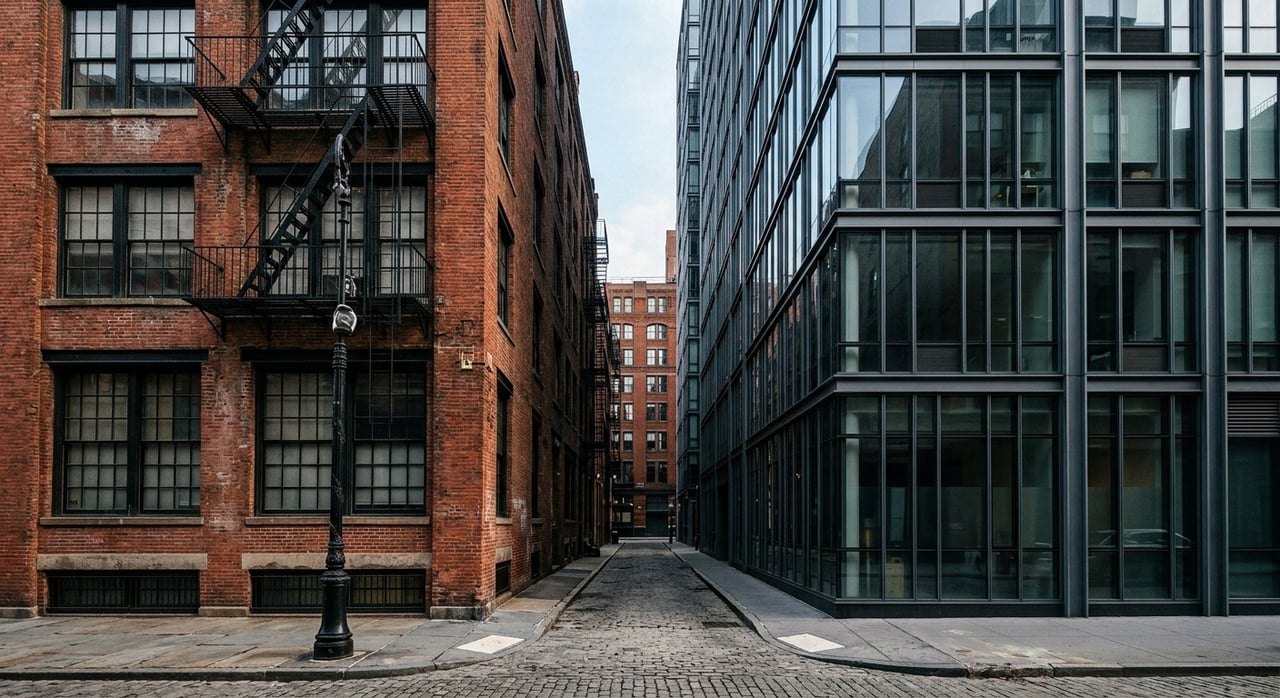
DUMBO’s housing mix reflects the way the neighborhood evolved over time. The Landmarks Preservation Commission says the historic district was designated for its industrial streetscapes, while the Department of City Planning describes an area where warehouse and loft buildings were adaptively reused alongside newer mixed-use construction.
That blend is part of what makes DUMBO distinct. You can walk past brick warehouse conversions with oversized windows and then see newer high-rise condos designed around views, services, and modern amenities. The city’s 2025 restoration of 26 blocks of cobblestones and infrastructure reinforces how much the neighborhood’s physical character still matters.
Many of DUMBO’s loft conversions began as factory or warehouse buildings. According to the Department of City Planning, these buildings often feature brick and reinforced-concrete construction, large windows, and industrial floorplates that bring in strong natural light.
For you as a buyer, that usually translates into volume, texture, and flexibility. Loft homes often feel open because they have fewer hard partitions, taller ceilings, and details like exposed concrete columns or beams.
A well-known example is 70 Washington Street, a 1916 factory converted to condos in 2005. A recent unit there highlighted oversized eastern windows, an open floor plan, 11-foot beamed ceilings, and concrete columns. The building also includes practical amenities like a 24-hour attended lobby, package room, fitness center, common laundry, and a large roof deck.
The Sweeney Building is another useful point of comparison. Built in 1910 and later converted from a factory, recent listings there emphasized open layouts, 11-foot ceilings, and in some cases East River and bridge views.
Newer condo towers in DUMBO tend to offer a different kind of value. Instead of leading with industrial texture, they often focus on service, predictability, and a more turnkey lifestyle.
Front & York at 85 Jay Street is one of the clearest examples. Built in 2021, it includes concierge and doorman service, a pool, gym, children’s playroom, media room, garage and valet parking, cold storage, roof deck, garden, and patio spaces.
Olympia Dumbo at 30 Front Street pushes even further into the full-service tower category. Built in 2024, it offers concierge and doorman service, a pool, hot tub, playroom, gym, media room, parking, valet service, and outdoor deck and patio space.
If you want a home where amenities are part of daily life, a newer tower may feel more straightforward. These buildings often package convenience in a way that loft conversions usually do not.
One of the biggest differences comes down to how the home lives day to day. In many loft conversions, the selling point is space that feels open-ended rather than tightly programmed.
Listings at 70 Washington Street and the Sweeney Building often emphasize open-concept living, airy floor plans, bonus-room potential, and tall ceilings. That can work well if you value a less conventional layout or want room that can adapt to how you live and work.
Newer towers usually offer more predictable bedroom counts and more standardized floor plans. Front & York and Olympia listings often focus on foyers, corner exposures, and smart layouts that make it easier to understand how each room functions.
Neither approach is automatically better. If you want a home with personality and flexibility, a loft may appeal more. If you prefer efficiency and a layout that feels easy to furnish and use from day one, a tower may be the stronger match.
Both property types can deliver strong natural light, but they often do it in different ways. Loft conversions benefit from oversized industrial windows that were originally designed to bring daylight deep into large factory floors.
That is a big reason lofts feel so bright and dramatic. In DUMBO, those large windows can create a striking sense of openness, even when the building is not especially tall.
Towers, on the other hand, are more likely to compete on open water, skyline, and bridge views. Recent listings at Front & York highlighted harbor and skyline exposures, while Olympia emphasized open views from its higher elevation and upper-floor positioning.
So if your priority is architectural light and interior character, a loft may stand out. If your goal is a more consistent shot at panoramic views, towers tend to have the edge.
It is easy to assume lofts cost less to carry than full-service towers, but the examples in DUMBO show that the reality is more nuanced. Building type alone does not determine your monthly costs.
Here is a snapshot from recent listings and sales discussed in the research:
| Building and Unit | Approx. Monthly Total |
|---|---|
| Front & York #5K | $2,043 |
| Olympia #17D | $2,411 |
| Sweeney #3D | $2,549 |
| 70 Washington #8M | $3,164 |
| Front & York #16A | $3,334 |
These totals combine common charges and taxes. What this tells you is simple: you need to evaluate each unit on its own merits.
A loft conversion may have lower amenity load in some cases, but that does not guarantee lower carrying costs. Unit size, tax basis, staffing, services, and building operations can all move the number up or down.
For many buyers, the real decision is not old versus new. It is character-first living versus amenity-first living.
Loft conversions often appeal to buyers who want one-of-a-kind interiors, industrial texture, and a sense of history. These homes can feel more distinctive because the architecture does more of the talking.
Newer towers often appeal to buyers who want convenience built into the property itself. If daily access to a doorman, fitness space, pool, parking, or programmed common areas matters to you, a tower may better support your routine.
This is why your checklist matters more than the label on the building. A buyer who loves exposed concrete columns may not care about a media room. A buyer who wants cold storage and valet parking may not want to trade that for a more open-ended loft plan.
DUMBO’s identity is closely tied to its industrial past. The Landmarks Preservation Commission points to the historic district’s industrial streetscapes, and the Department of City Planning describes both adaptive reuse and new construction as part of the neighborhood’s development.
That matters because it supports two different value stories. Authentic lofts benefit from scarcity, architectural character, and a built form that is hard to replicate. Newer towers compete with condition, amenities, service, and view-oriented living.
For you, that means resale is less about choosing the “right” category and more about choosing the right unit within that category. The strongest resale candidates are usually the homes that best represent what buyers want from that particular building type.
If you are weighing a loft conversion against a newer tower, focus on a few practical questions:
When you compare homes this way, the decision usually gets clearer. You stop thinking in broad categories and start matching the property to your actual lifestyle and budget.
DUMBO offers something rare in Brooklyn: a neighborhood where historic loft living and modern tower living both feel authentic to the place. The better choice depends on what you value most.
If you want soaring ceilings, industrial materials, and a home that feels singular, a loft conversion may be your best fit. If you want full-service convenience, more predictable layouts, and a stronger emphasis on amenities and views, a newer tower may make more sense.
If you are comparing options in DUMBO and want a clear, practical read on what fits your goals, Nat Guerriera can help you weigh the details and move forward with confidence.


Pen Realty greets clients with a devotion to seamless home sales and a professional promise to buy or list with expert confidence.
Get in Touch With Our Team to Learn More