How Brooklyn’s Micro-Markets Move In Sync
April 2, 2026
April 2, 2026
If Brooklyn feels like one market on paper but four different markets on the ground, you are not imagining it. Across 2025 and early 2026, the borough stayed broadly competitive, yet the pace, pricing power, and negotiating room still varied sharply by neighborhood. If you are buying or selling in Brooklyn, understanding those micro-market differences can help you make smarter moves and set better expectations. Let’s dive in.
Brooklyn’s big-picture numbers show a market that is active, but no longer moving at one uniform speed. In December 2025, Brooklyn’s median asking price was $1.0175M, with 3,434 homes for sale, up 10.1% year over year, and a median of 73 days on market, according to StreetEasy’s market report. In August 2025, homes sold for a median of 99.7% of last asking price, and 33.5% sold above asking.
That tells you something important. Buyers had more choices than the year before, but demand did not disappear. Instead, Brooklyn behaved like a borough in the same broader cycle, with each neighborhood running on its own clock.
Neighborhoods do not react the same way because they do not offer the same product. A brownstone-heavy area with limited supply will often behave differently from a luxury condo district or a neighborhood where buyers are prioritizing space and value. Even when borough-wide conditions are similar, those local details change how fast homes move and how much leverage buyers or sellers have.
StreetEasy’s neighborhood data highlights this clearly in places like Park Slope, Bay Ridge, DUMBO, and Windsor Terrace. Housing stock, buyer priorities, transit options, and day-to-day convenience all shape how each market absorbs inventory.
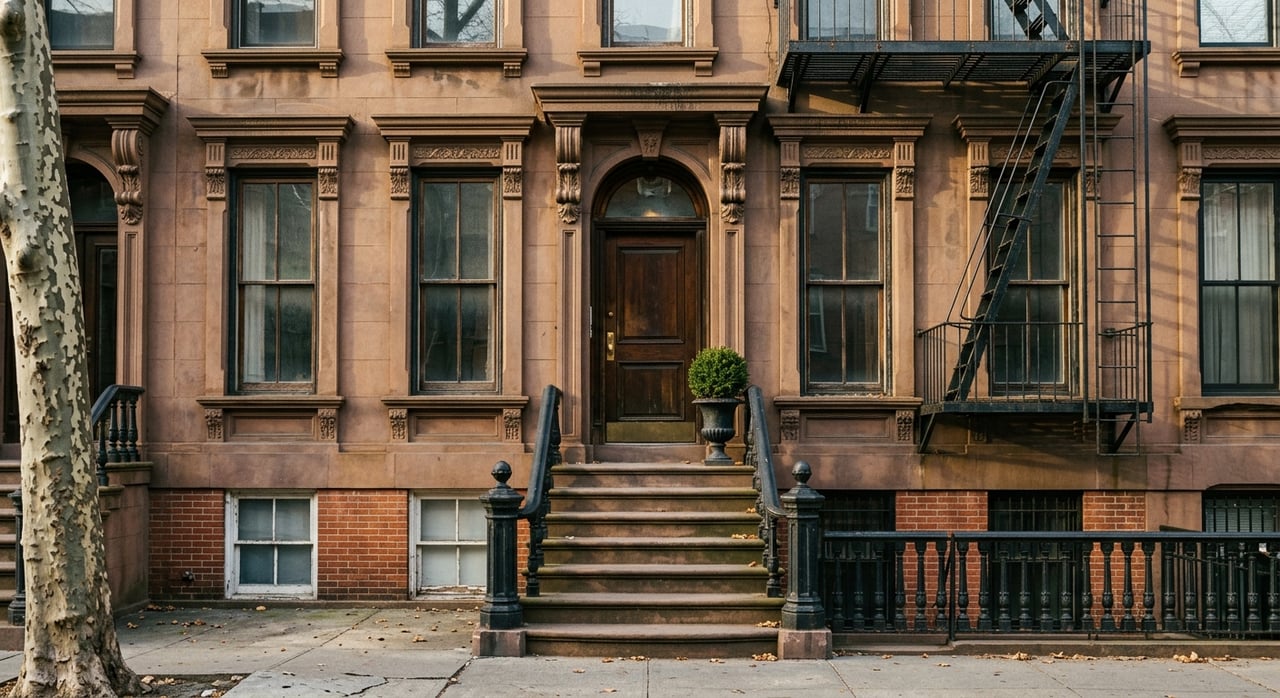
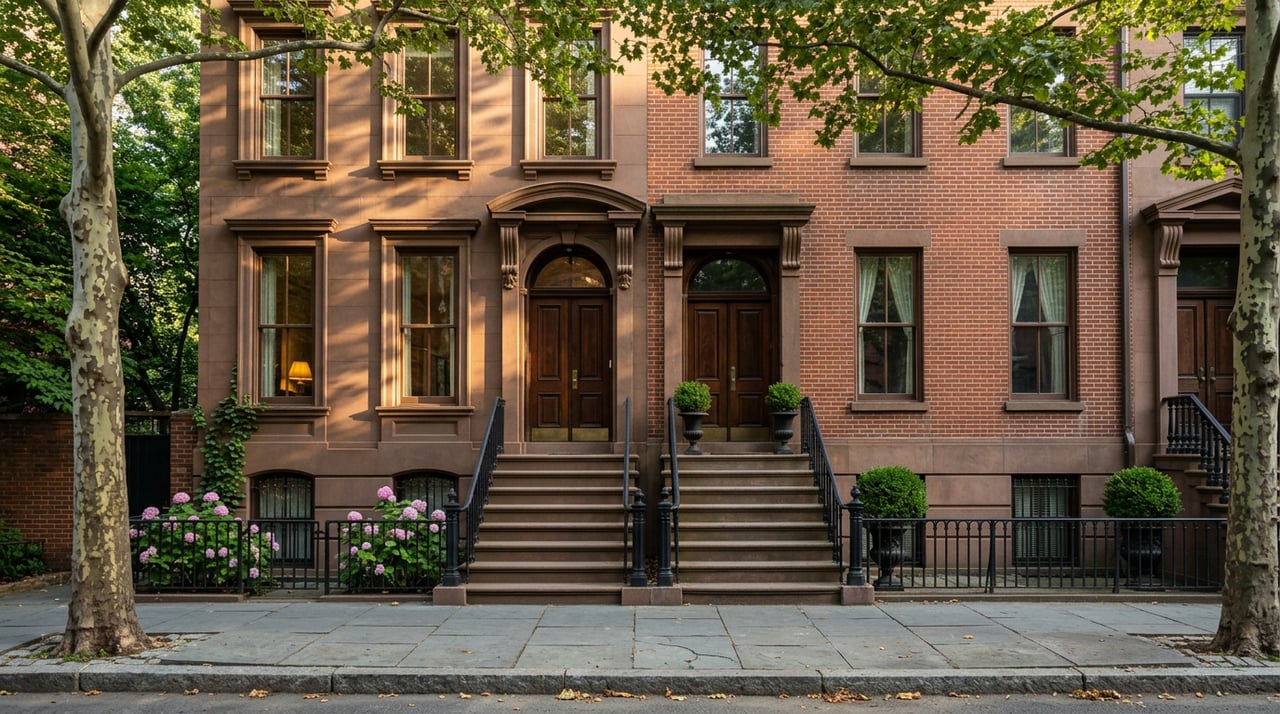
Park Slope is known for historic brownstones and prewar co-ops. Bay Ridge leans more residential, with row houses, larger homes, and more opportunities for outdoor space. DUMBO is a post-industrial loft and luxury condo market, while Windsor Terrace offers a lower-rise mix of townhouses and co-ops near major green space.
Those differences matter because buyers are not just shopping by price. They are also choosing between property types, maintenance realities, building styles, and neighborhood trade-offs. A buyer searching for a townhouse in Park Slope is not always cross-shopping the same way as someone comparing condos in DUMBO.
Each neighborhood attracts a different mix of buyers. StreetEasy describes Park Slope as community-oriented and centered around Prospect Park, while Bay Ridge has a strong long-term-resident base and a more residential feel. DUMBO tends to attract buyers and renters drawn to waterfront views and design-forward buildings, and Windsor Terrace is often positioned as a more affordable alternative to Park Slope.
That means demand does not arrive evenly. A neighborhood with broad appeal and tighter resale inventory can stay competitive longer, while an area with more price-sensitive buyers may respond faster to rising supply.
Transit and daily convenience often shape how much flexibility buyers have on price. StreetEasy notes commutes of up to 45 minutes from parts of Park Slope and Bay Ridge, while DUMBO’s options are more limited, centered on the F train, and the neighborhood page also notes fewer everyday amenities like full-service grocery stores. Windsor Terrace listings often highlight F/G and B/Q access, along with roughly 40-minute Midtown commutes.
For many buyers, that trade-off is simple. If a neighborhood offers more space, park access, or a lower price point, some commute friction may feel worth it. But those same factors can also change how fast listings move when inventory grows.
Park Slope remains one of the clearest examples of a premium micro-market that tends to hold its footing even when Brooklyn inventory rises. StreetEasy’s Park Slope neighborhood page shows a $1.7M median sale and 62 days on market, while a January 2026 deal post put the neighborhood’s median asking price at $2M. In September 2025, 44% of Park Slope homes sold above asking, with a median sale price of $1.395M.
That combination points to a neighborhood where sellers often still have pricing power, especially when a home is move-in ready, well marketed, and positioned correctly. Inventory did rise 7% from 2024 to 2025, but Park Slope still moved faster than several nearby markets. In practical terms, that means buyers often need to be decisive, while sellers still need a sharp pricing and presentation strategy.
Park Slope’s appeal is not based on one factor alone. It is the combination of housing character, Prospect Park access, and a long-established buyer pool that keeps it resilient. When a neighborhood has both strong lifestyle appeal and relatively constrained inventory, price softness tends to show up more selectively.
For sellers, that does not mean overpricing is safe. It means strong listings can still stand out and attract urgency. For buyers, it means patience matters, but hesitation can cost you when the right property comes up.
Bay Ridge is a useful counterpoint because it often gives buyers a different kind of opportunity. StreetEasy’s 2026 buyer-market roundup put Bay Ridge’s median asking price at $699,000 with 192 homes for sale, up 6.7% year over year. The neighborhood page shows a $700K median sale and 79 days on market.
That longer timeline matters. Compared with Park Slope, Bay Ridge tends to offer a slower pace and more negotiating room, especially for buyers focused on value, larger layouts, driveways, or outdoor space. The lower entry point also makes it one of the more accessible Brooklyn markets for buyers who want more home for the money.
Bay Ridge is shaped by affordability and space, but also by trade-offs. Commute times can be longer, and buyer urgency is often lower than in Brooklyn’s most competitive core neighborhoods. That can make the market more sensitive to inventory increases.
For buyers, this can create leverage. For sellers, it raises the importance of realistic pricing and strong positioning from day one. A well-prepared listing can still perform well, but expectations should reflect the neighborhood’s pace rather than Park Slope’s.
DUMBO often looks like Brooklyn, but it does not always move like the rest of Brooklyn. StreetEasy’s 2025 year-in-review ranked DUMBO among the borough’s most expensive sales markets, with a $1.983M median asking price. The same report showed a $5,899 median asking rent and a 58% year-over-year increase in rental inventory.
StreetEasy’s neighborhood data shows a $1.7M median sale and 79 days on market. Unlike brownstone neighborhoods, DUMBO is more tied to luxury inventory, loft-style product, and newer development dynamics. When supply rises at the top end, buyers often gain more room to negotiate than they would in a tighter owner-occupied co-op or townhouse market.
DUMBO has a narrower amenity and transit profile than some buyers expect. StreetEasy notes that transportation is largely limited to the F train, and the area lacks some everyday conveniences. Even with strong visual appeal and high-end housing stock, those limits can shape demand differently than in more residential neighborhoods.
That is why DUMBO can move on a different timeline. Luxury pricing, new development competition, and a more specialized buyer pool can create a market rhythm that does not match nearby brownstone or park-adjacent areas.
Windsor Terrace may be the best example of a neighborhood gaining momentum before prices fully catch up. StreetEasy’s 2026 neighborhoods-to-watch list reported that searches for Windsor Terrace rose 44.9% year over year, the biggest increase among Brooklyn neighborhoods on that list. At the same time, median asking price fell 12.8% to $1.125M.
That is a useful signal for buyers and sellers alike. Interest can rise before closed-sale prices fully reflect it. StreetEasy also framed Windsor Terrace as a more affordable alternative to Park Slope, and the area currently showed 29 listings for sale, reinforcing how limited supply can still support attention when pricing is more approachable.
Windsor Terrace sits between Prospect Park and Greenwood Cemetery, which helps support its appeal to buyers looking for green space and a more residential feel. Transit access, often highlighted through F/G and B/Q connections, adds another layer of convenience. Taken together, that makes it a neighborhood where demand can build steadily even if sellers still need to price carefully.
For buyers, this can be a window of opportunity. For sellers, it is a reminder that rising interest does not automatically justify aggressive pricing. Strategy still matters.
If you are buying in Brooklyn, the borough-wide headlines only get you so far. You need to know whether the neighborhood you want is a fast-moving premium market, a value market with more flexibility, or a luxury submarket with its own supply cycle.
A few practical takeaways can help:
The goal is not just to buy in Brooklyn. It is to buy in the right micro-market for your budget, timeline, and day-to-day priorities.
If you are selling, local context matters even more than broad market sentiment. A seller in Park Slope may still benefit from strong buyer demand, while a seller in Bay Ridge may need to lean harder on value and condition. In DUMBO, the competitive set inside your specific building or product category may matter more than borough-wide averages.
That is why pricing, marketing, and timing should be neighborhood-specific. In a borough where markets move in sync only at a high level, the best results usually come from strategies tailored to your block, property type, and buyer pool.
If you want a neighborhood-first read on your Brooklyn property or your next move, Nat Guerriera can help you cut through the borough-wide noise and focus on the micro-market that actually matters.
Pen Realty greets clients with a devotion to seamless home sales and a professional promise to buy or list with expert confidence.
Get in Touch With Our Team to Learn More