First Place Didn't Get Good at Halloween. It Got Zoned for It in 1846.
September 10, 2026
September 10, 2026
Walk First Place in Carroll Gardens any October evening and you will eventually stop counting skeletons. Somewhere around the fourth or fifth yard, the tally becomes pointless, because the real story on this block was never about enthusiasm. It is about square footage that almost nobody else in Brownstone Brooklyn has.
Every October, Christmas, and Easter, First through Fourth Place turn into one of the borough's most reliable decoration destinations, a status confirmed by neighborhood guides going back years and repeated by residents who have watched the same yards escalate season over season. The instinct is to explain this the way most "best decorated streets" roundups do: enthusiastic neighbors, friendly one-upmanship, maybe a block association email chain that got out of hand. That explanation is not wrong. It is just incomplete, and it skips the one detail that actually matters if you want to understand why this specific four-block stretch does it and not, say, the block one street over.
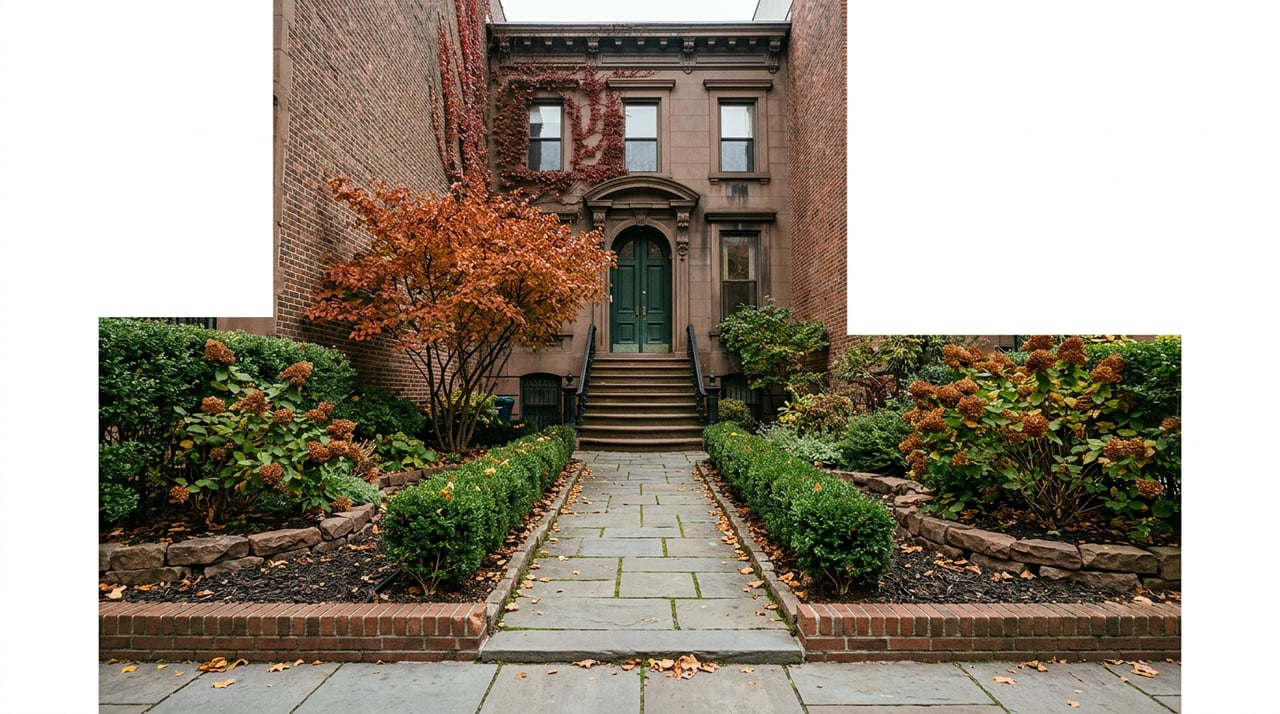
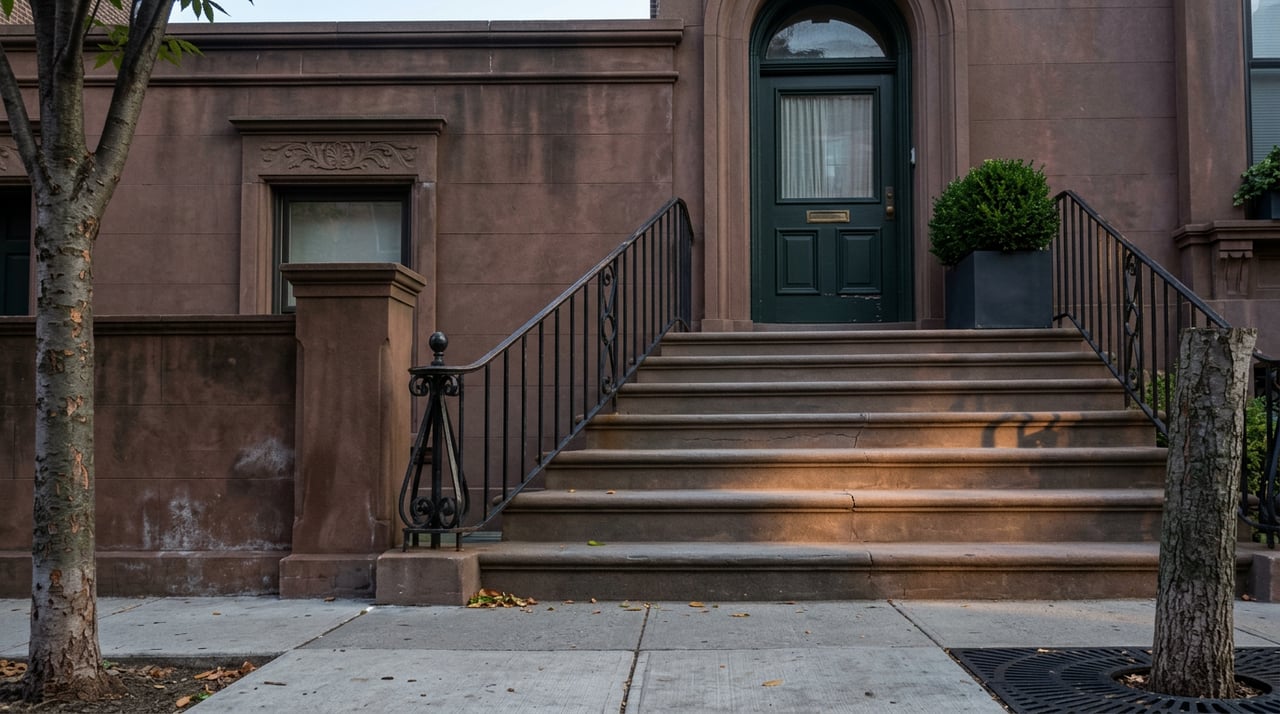
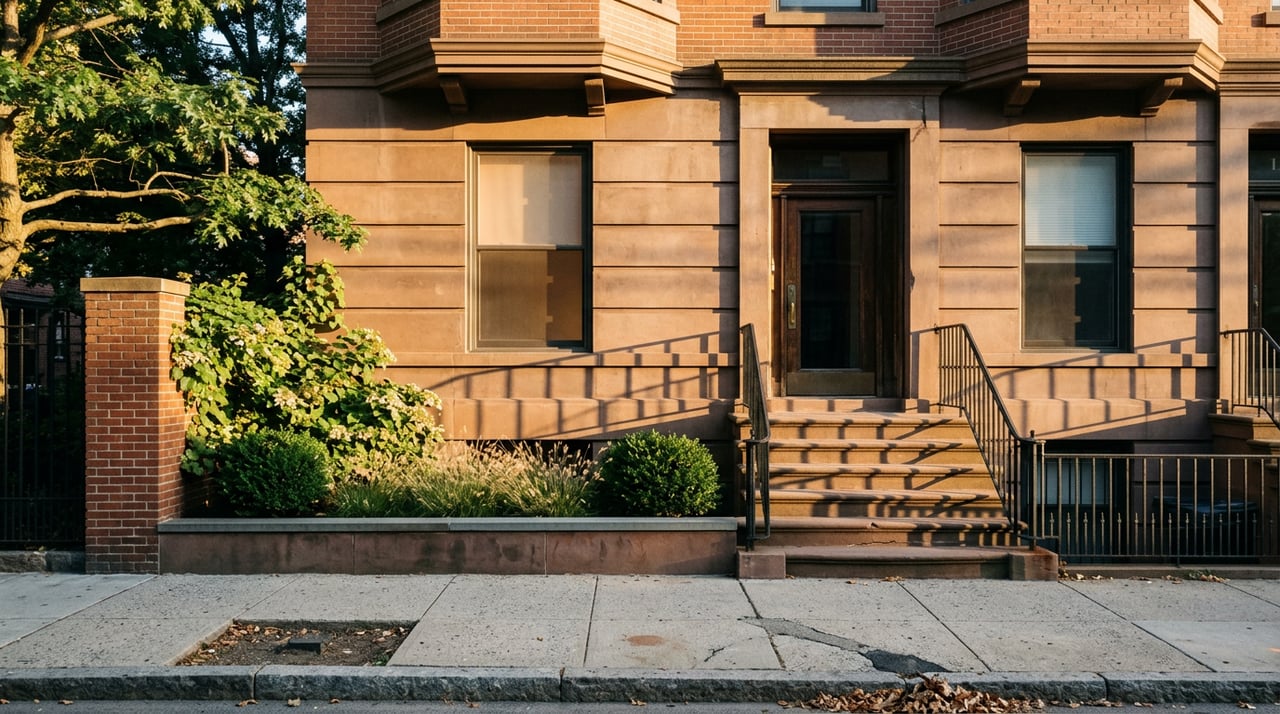
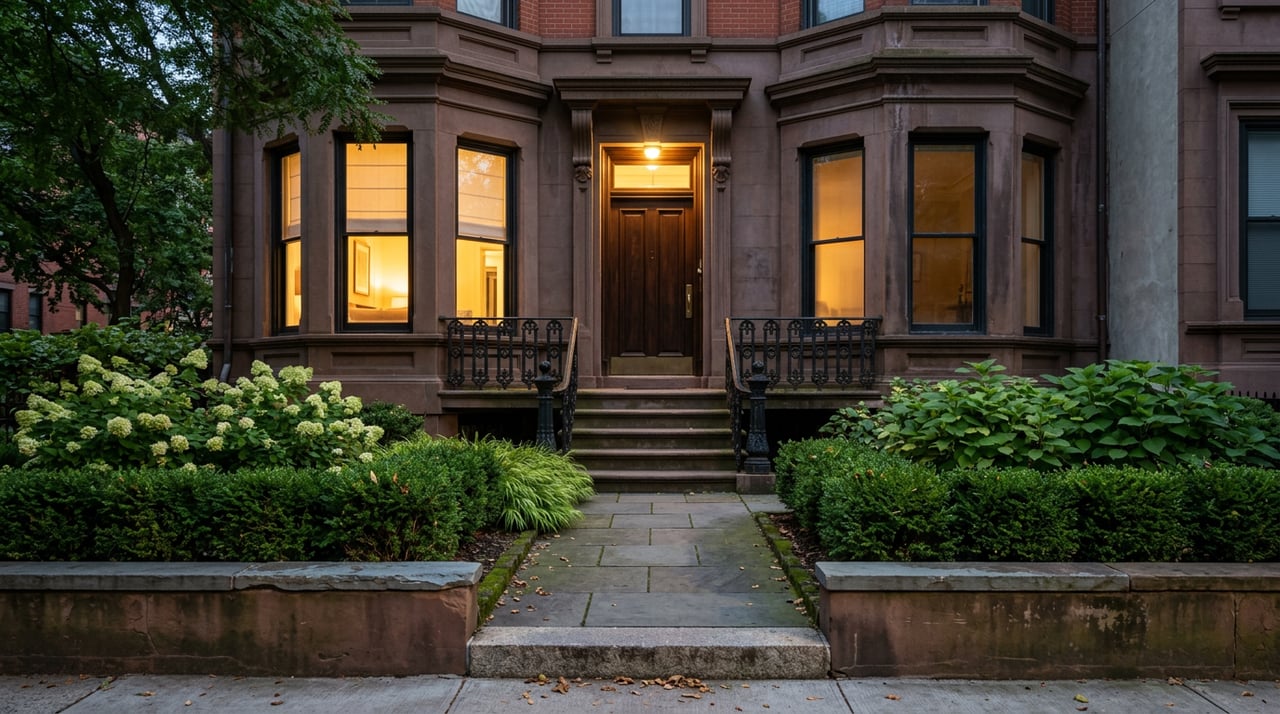
In 1846, city surveyor Richard Butt laid out the residential blocks that would become Carroll Gardens, and he wrote a dimension into the plan that still governs what happens on these sidewalks 180 years later. Buildings between Henry Street and Smith Street were required to sit 33 feet 5.25 inches back from the street, creating what residents still call, correctly, gardens rather than yards.
That is not a decorative flourish. On most Brooklyn brownstone blocks, the space between stoop and sidewalk is barely enough for a wrought iron fence and a few potted plants. On First through Fourth Place, it is enough for a staged scene. A homeowner here is not decorating a threshold. They are dressing a small stage, and the stage was written into the neighborhood's plan by a 19th-century surveyor who had never heard the word Halloween used the way Brooklyn uses it today.
This is why the comparisons to other Brooklyn Halloween streets never quite hold up. Milton Street in Greenpoint and the "Holiday House" at 635 79th Street in Bay Ridge are genuine standouts, but they are standouts precisely because they are exceptions on blocks where most houses have no room to compete. First to Fourth Place work differently. The infrastructure for an elaborate display is the default condition, not the ambition of one particularly committed household. When every house on a stretch has the same 33-plus feet to work with, the incentive is not to be the one house that goes big. It is to not be the one house that looks bare next to four neighbors who didn't hold back.
The yards do not just allow more decorations. They allow different kinds of decorations, the sort that need depth to read properly from the sidewalk. A twelve-foot flying witch spotted outside a Carroll Gardens home in early November 2022 is the clearest example. Displays at that scale are not possible on a standard Brooklyn stoop, where there simply is not enough distance between the fence line and the front door to stage something meant to be seen in the round rather than glanced at in passing.
The following year brought a different kind of ambition on the same blocks: a garden skeleton posed as a snake, guarding a flower bed with a handwritten warning to would-be flower thieves. It is a small detail, but it says something real about how residents here treat the front garden. It is not just a display space. It is still a garden being gardened, with a decoration that had to work around actual plantings rather than replace them. That tension between horticulture and haunting is specific to blocks with enough dirt to have both.
None of this means every house on First through Fourth Place is competing for a twelve-foot centerpiece. Most aren't. But the deep setback means the ambitious ones have somewhere to put their ambition, and that is the detail that separates this stretch from almost anywhere else in the neighborhood.
The tradition connects to a wider Halloween circuit that residents already use without necessarily knowing why it flows the way it does. If you are walking it this season, the pieces fit together like this:
That route is not a marketing invention. It is the shape the neighborhood's own geography and history have already given the evening, block by block, without anyone needing to plan it.
There is a reason to expect this to keep holding rather than fade the way plenty of neighborhood traditions eventually do. The physical form that makes it possible is not just customary. It is protected. The blocks bounded roughly by Carroll, President, Smith, and Hoyt Streets were designated the Carroll Gardens Historic District by the New York City Landmarks Preservation Commission in 1973, which means the deep front gardens that make the Halloween displays possible cannot simply be built over or paved into extra square footage the way an unprotected block might eventually see happen.
That protection is worth sitting with for a second, because it means two different rules, more than a century apart, have been doing the same job: keeping a specific, unusual piece of Brooklyn geometry intact. The 1846 setback built the space. The 1973 landmark designation, now in its 53rd year, keeps anyone from building over it. Halloween is simply the season when that geometry is most visible, most photographed, and most walked. The rest of the year, the same deep yards are doing quieter work, holding stoop conversations, hydrangeas, and the occasional bocce-adjacent lawn chair. October just puts a spotlight on what the neighborhood has been sitting on the whole time.
If you already live on one of these blocks, none of this changes your Tuesday. But it might change how you describe the neighborhood to a friend who is skeptical that "the Halloween street" is worth a special trip. It is not enthusiasm on display. It is 180 years of a surveyor's dimension, still doing exactly what it was drawn to do.
For residents curious about what a deep front garden like these actually does for a home's value, or what a First Place brownstone with that kind of yard could be worth on today's market, Pen Realty has spent years watching how these specific blocks trade. Request Your Signature Market Valuation, and Peter Mancini will walk you through what your particular stretch of Carroll Gardens is actually worth right now, gardens and all.
Pen Realty greets clients with a devotion to seamless home sales and a professional promise to buy or list with expert confidence.
Get in Touch With Our Team to Learn More