The BQE Repair Will Reach the Promenade, Squibb Park and Harry Chapin Playground. What's Decided So Far, and What Isn't
October 29, 2026
October 29, 2026
NYC DOT's current schedule puts construction on the Central BQE between 2029 and 2040. The Promenade itself would be worked on in segments from 2032 to 2040, according to Brooklyn Heights Blog. No fence is going up this fall.
This month, the city is deciding what its environmental review will study, and the public can comment on that list until the end of the day on Monday, November 23, 2026. For anyone who walks the Promenade, takes a dog to Hillside Dog Park or brings kids to Harry Chapin Playground, these three weeks are the earliest formal chance to have a say over what the next ten years look like.
The 2018 idea is the one many longtime residents remember: a temporary six-lane highway built on top of the Promenade. The 2026 plan is a different project. As Streetsblog explained, DOT's two-level temporary bypass sits below Promenade level, in the Furman Street right-of-way.
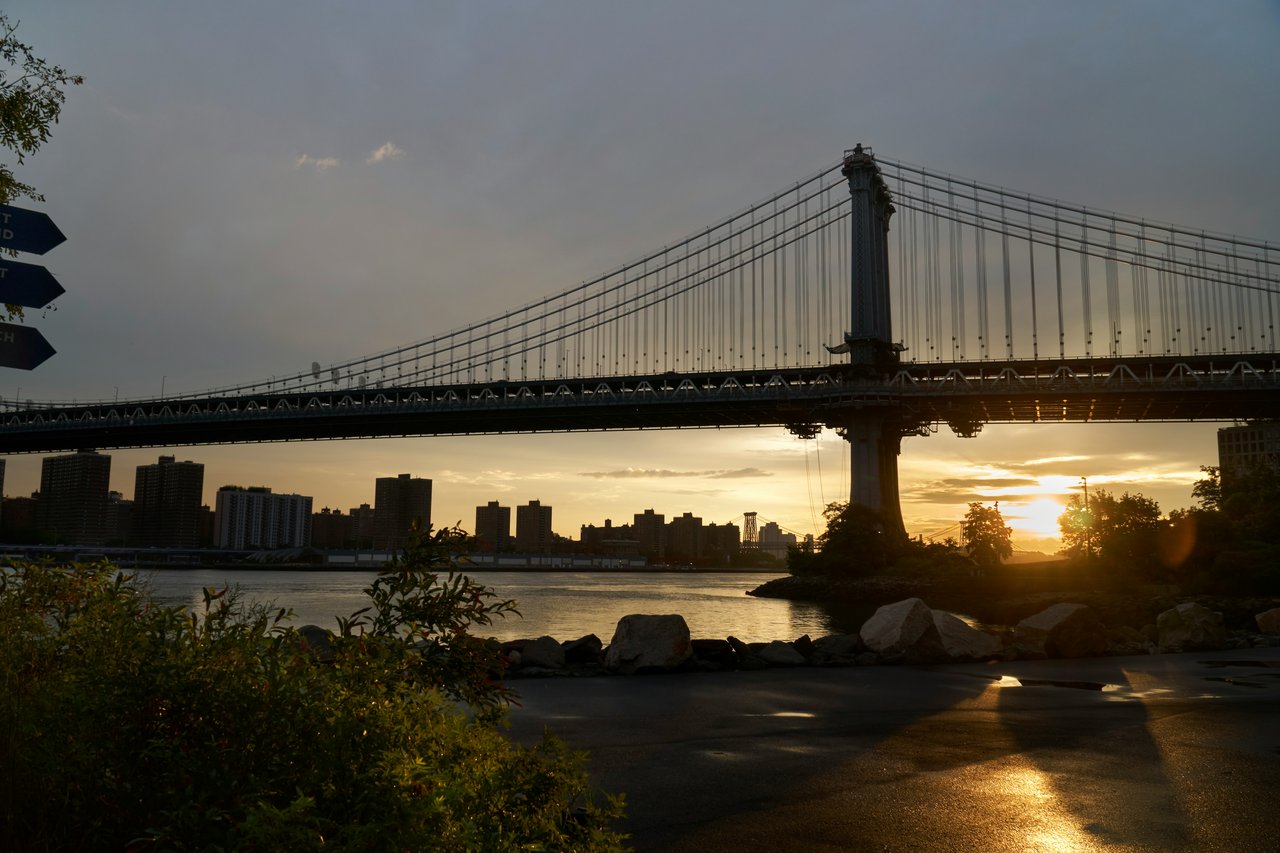
The Draft Scope of Work, dated October 2, describes two temporary structures. The first runs parallel to the triple cantilever from just north of Atlantic Avenue to Columbia Heights. The second would carry traffic from Columbia Heights, possibly over the Brooklyn Bridge, through Dumbo, and back into the BQE just west of the Manhattan Bridge. DOT's project page says the Furman Street bypass will be no higher than today's Queens-bound roadway, and that both bypasses come down after construction.
At an October session reported by Pineapple Street, DOT chief strategy officer Tiffany-Ann Taylor called the design "the most conservative proposal" the city has put forward. She also said it isn't final, and that engineers are still studying other alignments and ways to lower some of the bypasses. DOT's October 6 presentation also calls the alignments illustrative and subject to refinement.
For the Heights, the route matters because of what sits next to it. Brooklyn Bridge Park is reached from Furman Street, and the Brooklyn Eagle reported that DOT plans to keep that access open throughout construction.
The plan treats the neighborhood's waterfront-edge spaces differently, and the details are spread across several documents. Put together, they look like this.
The Promenade. The Promenade is part of the triple cantilever structure, so repairing the highway means repairing the walkway on top of it. DOT says it will keep "portions of the Promenade" open "at all times, to the extent feasible." At the October session, Taylor put it this way:
"As long as it is safe and feasible throughout the construction life of this project, we are maintaining access to the promenade. We have heard folks over and over that it is a really important open space to the community and to visitors alike, so we have committed to that."
That quote comes from Pineapple Street's report. Project engineer Matt Kusy told the same session that work would move along the Promenade several spans at a time, either north to south or south to north. The direction hasn't been chosen.
Harry Chapin Playground. The playground at Columbia Heights and Middagh Street is where the published materials differ. DOT's project page lists it with Squibb Park and Hillside Dog Park as spaces where access will be kept "to the extent feasible," and says it will be rebuilt along with the Columbia Heights overpass work. At the October session, according to Pineapple Street, DOT said the playground would be removed during construction and rebuilt afterward. The plan materials name no interim play space.
Squibb Park. This is the only permanent change in the plan as described so far. Kusy said a corner of Squibb Park would be permanently taken for a rebuilt overpass near Columbia Heights, and called it "minor permanent alienation." Pineapple Street noted that the city can't use parkland for anything else, even temporarily, without approval from Albany. That means state lawmakers have to sign off on both the temporary use of these parks and the permanent loss of part of Squibb Park.
The construction dates differ depending on the source. Mayor Mamdani's August 24 announcement described a roughly $4 billion, 10-year project breaking ground in 2030. DOT's October Environmental Assessment Statement lays out a 120-month construction period that starts in 2029 and finishes before 2040, with the bypasses going up first. The Brooklyn Eagle reported a preliminary sequence at the August launch:
| Preliminary phase | Window reported |
|---|---|
| Utilities and Columbia Heights overpass work | 2029 to mid-2031 |
| Bypasses completed, traffic shifted onto them | 2030 to 2032 |
| Triple cantilever rehabilitation | 2032 through 2040 |
| Traffic returns to the rebuilt structure | Third quarter of 2040 |
All of these years are estimates. The Columbia Heights overpass work, which is tied to both the playground rebuild and the Squibb Park corner, sits at the front of the schedule. The Promenade segments come later. In the order the Eagle reported, the north end of the neighborhood would feel the project several years before most of the Promenade does.
Overlapping construction also came up when DOT met the public. Pineapple Street reported residents' concerns about being "stuck" between construction zones, with the Watchtower conversion at 25–30 Columbia Heights and the Brooklyn Marine Terminal development also underway along the waterfront from Dumbo to Red Hook.
The open questions are the ones that matter most for everyday use. The draft materials give no start date, end date or length for the closures of Harry Chapin Playground or Squibb Park. There is no segment map for the Promenade and no set order for which spans close first. And no temporary playground site has been named.
Those gaps are the reason the timing matters. DOT has issued a Positive Declaration, meaning it has determined that a full Environmental Impact Statement is required. Open space is one of the effects it named, along with historic and cultural resources and construction. The scoping step now underway is where the city settles what that study will look at and how. DOT's presentation describes scoping as an early step to define the EIS study topics and methods and to take public input.
After November, the process moves on, according to DOT's October 6 presentation: a Final Scope in early spring 2027, a Draft EIS in fall 2027 and a Final EIS in 2028. Brooklyn Heights Blog noted that the review process is long and will likely offer more chances to take part.
DOT held an information session at Borough Hall on October 29. That session was separate from the formal scoping meetings. The official comment period runs on these dates, according to the city's public scoping notice:
Requests for accommodations such as a sign language interpreter or language assistance must be made at least ten business days before the meetings. The Environmental Assessment Statement, the Positive Declaration and the Draft Scope are all posted on the project site.
If you're on Montague Street for the Brooklyn Women's Exchange Holiday Open House at 137 Montague on November 5, from 5 to 8 p.m., the Promenade is close by. Under DOT's current schedule, it will stay as it is for some years yet.
If you own near Columbia Heights, Squibb Park or the Promenade and want to know how a decade-long public project fits into your own plans, Pen Realty tracks these timelines block by block. Request Your Signature Market Valuation, and Peter Mancini will go through what the BQE schedule means for your home.
Pen Realty greets clients with a devotion to seamless home sales and a professional promise to buy or list with expert confidence.
Get in Touch With Our Team to Learn More